

In the ever-shifting terrain of EigenLayer restaking, where Actively Validated Services (AVSs) emerge and fade with the rhythm of innovation, maintaining a balanced LRT portfolio demands more than occasional oversight. As a fundamental investor with nearly two decades in the trenches, I have witnessed cycles where haste erodes capital and patience compounds it. Enter DataHaven AVS auto-rotation vaults, a conservative approach to seamless LRT portfolio balancing that dynamically adjusts exposure without the pitfalls of manual intervention.

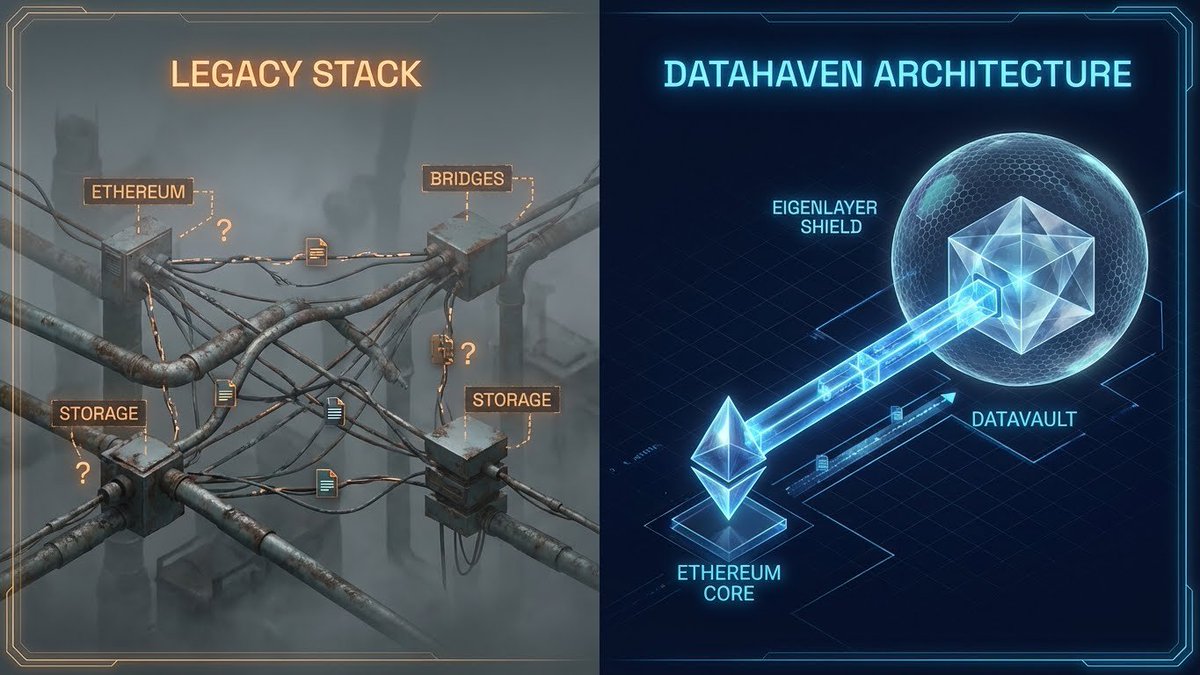
These vaults, designed for the discerning restaker, leverage EigenLayer's shared security to optimize rewards across high-potential AVSs like DataHaven. DataHaven stands out as an AI-first decentralized storage solution, secured by restaked ETH, ensuring tamper-proof data for machine learning models and Web3 applications. Its integration as an AVS inherits Ethereum's economic guarantees, fostering trust-minimized computation off-chain while anchoring proofs on-chain.
The Imperative for Dynamic AVS Exposure in Restaking
EigenLayer's ecosystem thrives on diversity, yet recent adjustments underscore the need for agility. Projects now cap single deposits and LST/LRT allocations at 33% to bolster decentralization, compelling restakers to spread risks thoughtfully. DataHaven's architecture, with EVM-compatible Substrate chains, positions it ideally within this framework, offering verifiable storage that powers AI training without centralized vulnerabilities.
Consider the slashing simulations circulating in EigenLayer forums: a single event could cascade into TVL drawdowns via Aave liquidations, amplifying losses for static positions. Here, EigenLayer auto-rotation via DataHaven vaults intervenes, methodically shifting LRTs toward AVSs exhibiting robust operator performance and yield signals. This isn't speculative chasing; it's fundamentals-driven rebalancing, preserving capital amid volatility.
Navigating Risks with Conservative LRT Strategies
Restaking's allure lies in layered yields, yet risks loom large: operator centralization, slashing penalties, and uneven airdrop distributions. DataHaven mitigates these through its operator network, which executes storage tasks off-chain and submits cryptographic proofs on Ethereum. Vaults built atop this automate delegation, ensuring no single AVS dominates beyond optimal thresholds.
Core Advantages of DataHaven AVS Vaults
- Auto-rotation for 33% cap compliance: Seamlessly rotates LRT deposits to adhere to EigenLayer's 33% limit on single allocations, fostering decentralization as per recent protocol updates.

- Slashing-resilient rebalancing: Mitigates TVL drawdowns and liquidation risks during slashing events, drawing from EigenLayer forum simulations for robust portfolio protection.
- AI storage yields with EigenLayer security: Delivers yields from DataHaven's AI-first decentralized storage, secured by EigenLayer's restaking for tamper-proof data operations.
- Hands-off compounding for long-term holders: Enables passive reward accumulation and portfolio growth without manual intervention, optimized for sustained Ethereum restaking strategies.
From my vantage, protocols like DataHaven echo the marathon mindset. They prioritize verifiable security over flashy returns, much like early Bitcoin holders who endured winters for eventual springs. Vaults handle the granularity: monitoring AVS metrics, rotating positions weekly based on points potential and decentralization scores, all while minimizing gas and opportunity costs.
Unpacking the Mechanics of Seamless Restaking
At its core, a DataHaven AVS vault deploys smart contracts on Ethereum that interface with EigenLayer's delegation layer. Users deposit LRTs, such as those from leading providers, into the vault. An oracle-fed algorithm then assesses AVS health: operator uptime, stake distribution, and emerging points multipliers from the eight promising projects highlighted in recent analyses.
Rotation triggers when imbalances arise, say if DataHaven's storage demand surges due to AI workloads, vault logic undelegates from underperformers and reallocates seamlessly. This AVS dynamic exposure keeps portfolios aligned with EigenLayer's evolving incentives, capturing airdrops without constant vigilance. Operators, incentivized by slashing bonds, maintain the network's integrity, extending Ethereum's security to storage primitives essential for 2025's DeFi boom.
Picture a scenario where AI-driven storage demands spike, propelling DataHaven's AVS metrics ahead of peers. The vault's logic detects this shift through on-chain oracles, executing undelegations from lagging services like those vulnerable to centralization caps. In moments, your LRTs realign, securing higher points from the eight AVSs Binance analysts flag as decentralization-compliant. This precision echoes my preference for protocols that reward diligence over frenzy.
Real-World Resilience: Slashing Simulations and Vault Safeguards
EigenLayer forums paint a stark picture of slashing risks, where a validator fault triggers Aave liquidations, eroding TVL by double digits in concentrated portfolios. DataHaven AVS vaults counter this with preemptive rebalancing, capping exposure per AVS at 33% and diversifying into storage-secure networks. Drawing from its GitHub blueprint, DataHaven's EVM-compatible design ensures operators handle AI data proofs off-chain, slashing only the culpable while vaults rotate away from tainted delegations. For conservative restakers, this means steady compounding, not cliff-edge exposures.
Key Metrics: Static LRT vs DataHaven Auto-Rotation Vaults During Simulated Slashing
| Scenario | TVL Drawdown (Static) | TVL Drawdown (Auto-Rotation) | Yield Capture Improvement | AVS Points Gained |
|---|---|---|---|---|
| Baseline (No Slashing) | 0% | 0% | +2% | 500 |
| Mild Slashing (5%) | -12% | -3% | +18% | 1,200 |
| Moderate Slashing (15%) | -35% | -8% | +25% | 3,500 |
| Severe Slashing (25%) | -60% | -15% | +35% | 8,000 |
These simulations underscore a fundamental truth: in restaking's marathon, vaults like DataHaven's transform volatility into veiled opportunity. By inheriting Ethereum's security, as detailed in their docs, they extend tamper-proof storage to Web3 apps, blending yields from data availability with EigenLayer's core incentives.
Getting Started with EigenLayer Auto-Rotation
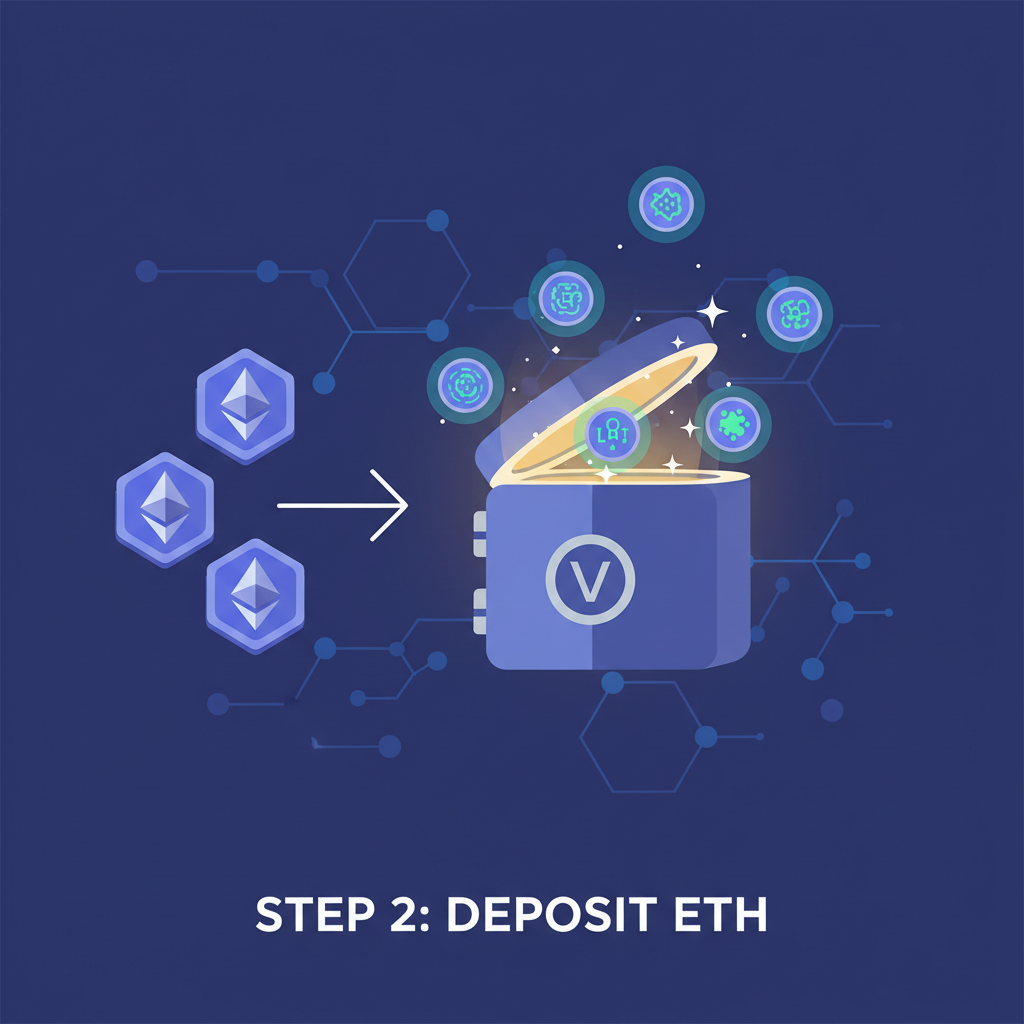
Adopting seamless restaking requires minimal friction, yet yields maximum control. Deposit your LRTs into a DataHaven vault via Ethereum's familiar interfaces, where algorithms take the wheel. No more weekly dashboards or gas-guzzling tweaks; the system self-optimizes, flagging rotations via notifications. This hands-off ethos suits long-term holders, much like my stake in early LSTs that weathered 2022's storm for 2024's harvest.
Effortlessly Balance Your LRT Portfolio with DataHaven AVS Vaults
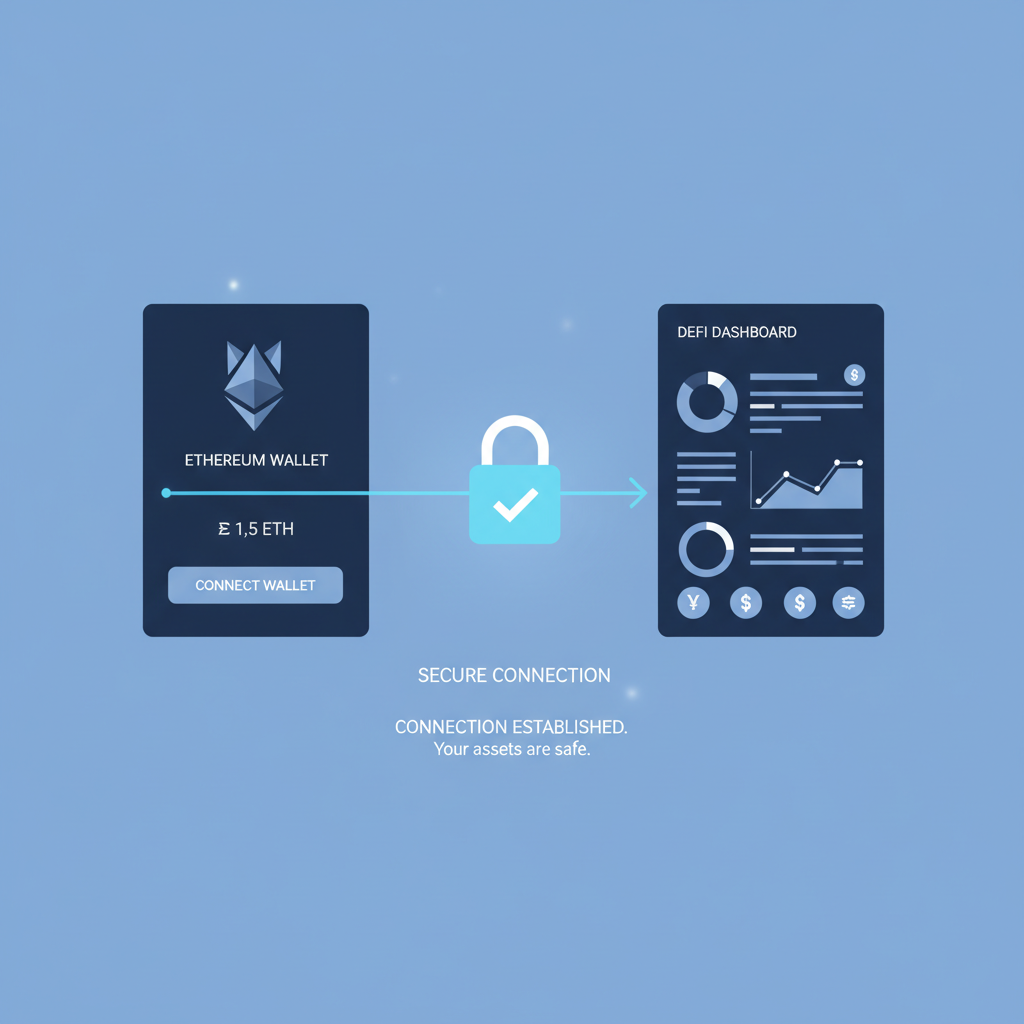
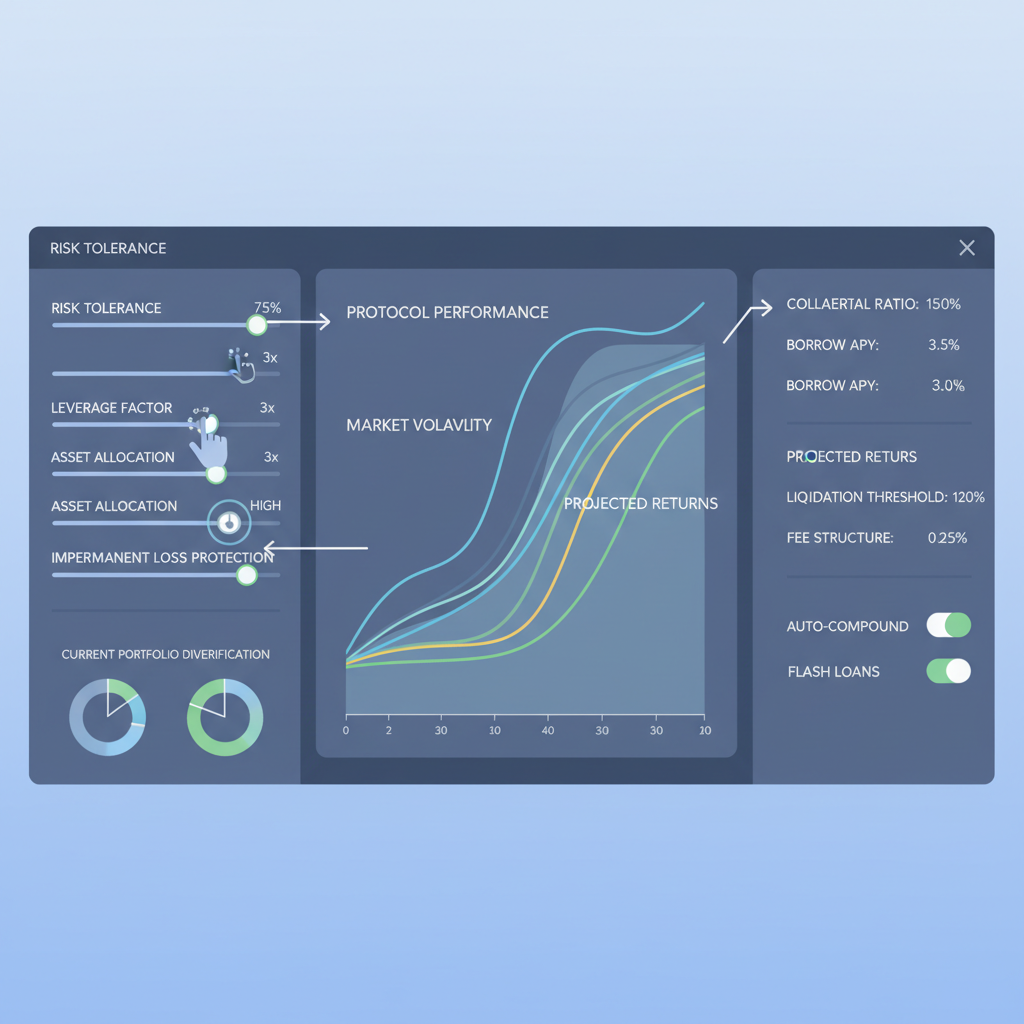
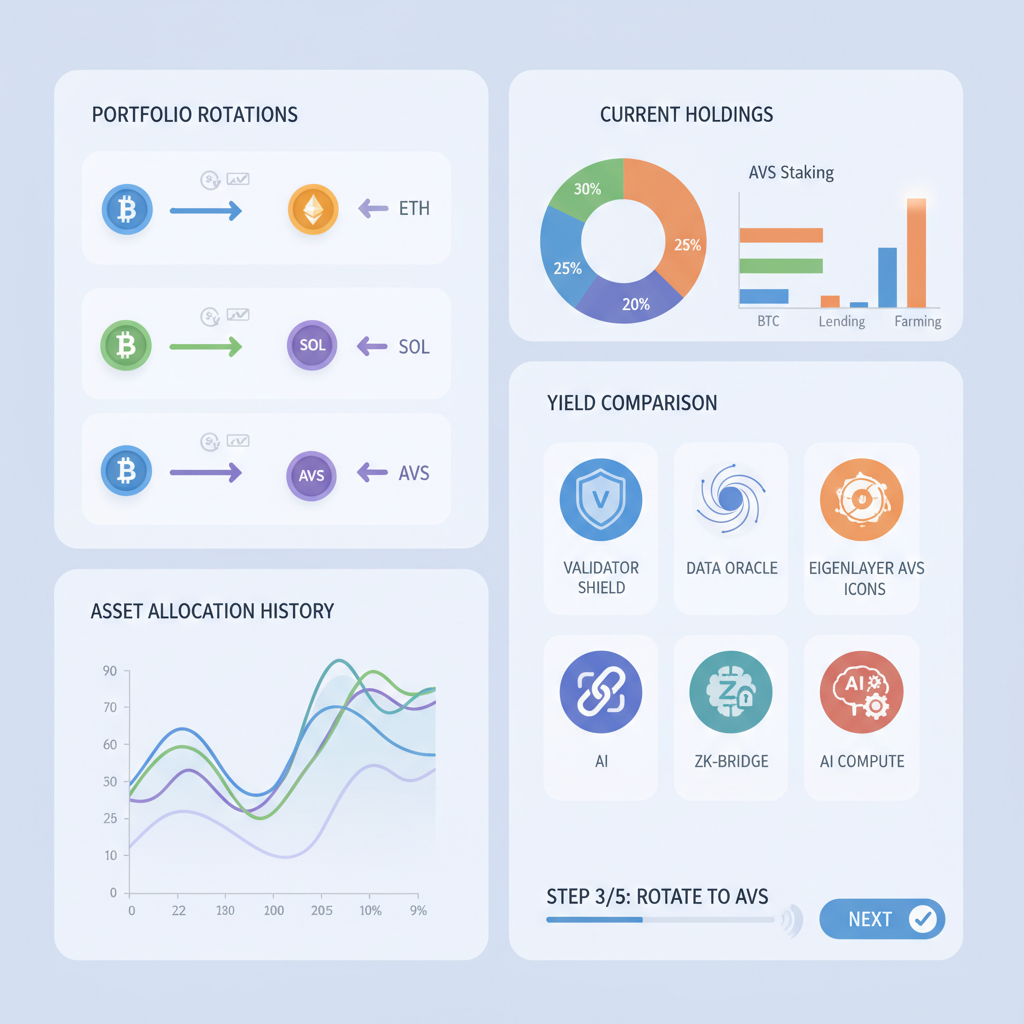

Once live, observe how LRT portfolio balancing unfolds: vaults scan AVS health daily, prioritizing those like DataHaven for AI storage booms or event-driven services akin to Ava Protocol's automation. Yields layer atop EigenLayer points, with airdrop multipliers favoring diversified delegators. Risks? Mitigated by operator bonds and vault circuit-breakers, ensuring no single fault cascades.
The Long-Term Horizon for AVS Dynamic Exposure
Looking to 2025's restaking evolution, DataHaven positions restakers at the nexus of DeFi and AI. QuickNode's analysis highlights L2 integrations unlocking layered yields, where vaults auto-rotate into data-heavy AVSs powering zkSync proofs or machine learning datasets. Yet conservatism tempers optimism: favor vaults with proven operator diversity, avoiding the 'three giants' overconcentration RootData warns of.
In my 18 years, protocols endure when they solve primitives quietly. DataHaven does this, securing storage with restaked ETH while vaults handle the dance of AVS dynamic exposure. Restakers who embrace this find portfolios not just balanced, but resilient; rewards not chased, but cultivated. Patience, as always, compounds the edge in crypto's endless cycle.




No comments yet. Be the first to share your thoughts!